

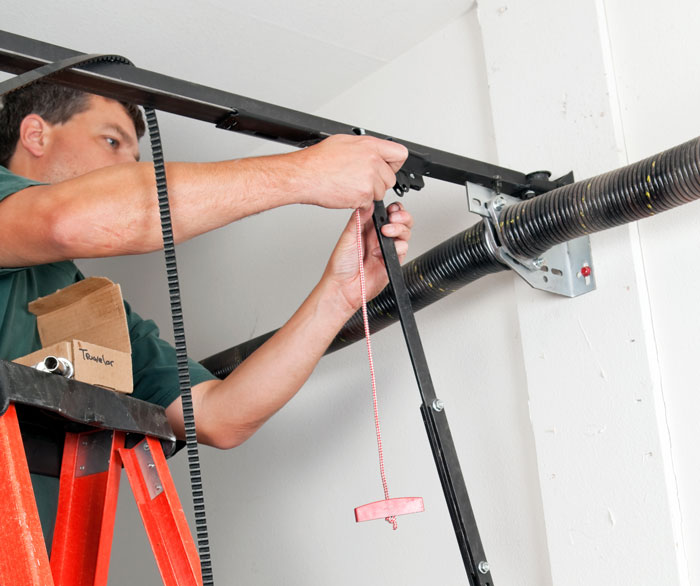
We love the “Do It Yourself” spirit. Many of our customers in Salt Lake City and Park City are incredibly handy homeowners who take pride in maintaining their properties. However, there is a distinct line between a weekend project and a dangerous gamble.
Your garage door is likely the largest, heaviest moving object in your home. It operates under massive tension, and when certain components fail, the result can be property damage or severe personal injury.
At DC Garage Doors Inc., your safety is our priority. While we encourage you to tighten a loose hinge or lubricate a squeaky roller, here are the 5 signs your garage door has become a hazard and requires a professional with the right tools and training.
1. A Broken Torsion Spring (The Loud “Bang”)
If you are home when a garage door spring breaks, you’ll know it—it sounds like a gunshot going off in your garage. If you weren’t home, you might just find that the door refuses to open more than a few inches.
Why it’s dangerous: Torsion springs are wound tight to lift a door that weighs hundreds of pounds. When they break, that tension is released violently. Why you shouldn’t DIY: Replacing a spring requires winding a new steel coil with extreme force using specific winding bars. One slip can result in broken fingers, facial injuries, or worse. This is the number one repair that should always be handled by a pro.
2. Frayed or Snapped Cables
Your lift cables work in tandem with the springs to pull the door up. Over time, moisture from Utah winters and general wear can cause these cables to rust, fray, and eventually snap.
Why it’s dangerous: If a cable snaps while the door is in motion, the door can slam down unevenly, crushing anything underneath it and twisting the tracks. Why you shouldn’t DIY: These cables are under the same high tension as the springs. Never attempt to cut a frayed cable or re-loop a snapped one yourself.
3. The Door is Off the Tracks
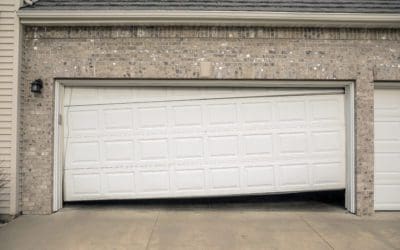
Maybe you accidentally backed into the door, or perhaps an obstruction knocked a roller loose. Now, the door is hanging crookedly or is completely jammed in the vertical track.
Why it’s dangerous: An off-track door is unstable. It has lost its structural support. Trying to force it open or closed can cause the entire door to fall out of the remaining tracks and onto your vehicle or you. Why you shouldn’t DIY: Getting a door back on track requires releasing tension and carefully realigning the heavy panels. It is a two-person job requiring knowledge of door geometry.
4. The “Safety Reverse” Test Fails
Federal law requires garage door openers to have sensors that detect obstructions. If you place a block of wood (or a roll of paper towels) on the floor and the closing door hits it without reversing, your safety sensors or opener force settings are failing.
Why it’s dangerous: This is a major risk for pets and small children. If the door doesn’t reverse, it can trap or crush. Why you shouldn’t DIY: While you can try cleaning the “eyes” of the sensors yourself, if the sensors are aligned and the door still won’t reverse, the internal force settings of the motor need professional adjustment or the logic board needs replacement.
5. Grinding or Screeching Sounds (Metal on Metal)
A little squeak is normal (and usually fixed with silicone spray). However, loud grinding, scraping, or screeching noises indicate a mechanical failure. This could mean a bearing has seized, a roller has disintegrated, or the opener gears are stripping.
Why it’s dangerous: This sound is the door telling you it is straining. Continued use will eventually lead to a catastrophic failure of the opener or the hardware. Why you shouldn’t DIY: Diagnosing exactly where the grinding is coming from often requires taking apart the opener housing or removing heavy hardware components.
When to Call the Experts
At DC Garage Doors Inc., we are a family-owned father-son team with over 40 years of combined experience. We have the winding bars, the proper tension tools, and the know-how to fix these issues safely and quickly.
Don’t risk your fingers or your property to save a few dollars. If you see any of these signs, give us a call immediately.

 Skip to content